Exploring the Ways to Build AI Agents across Technologies
Overview of AI Agent Building Technologies
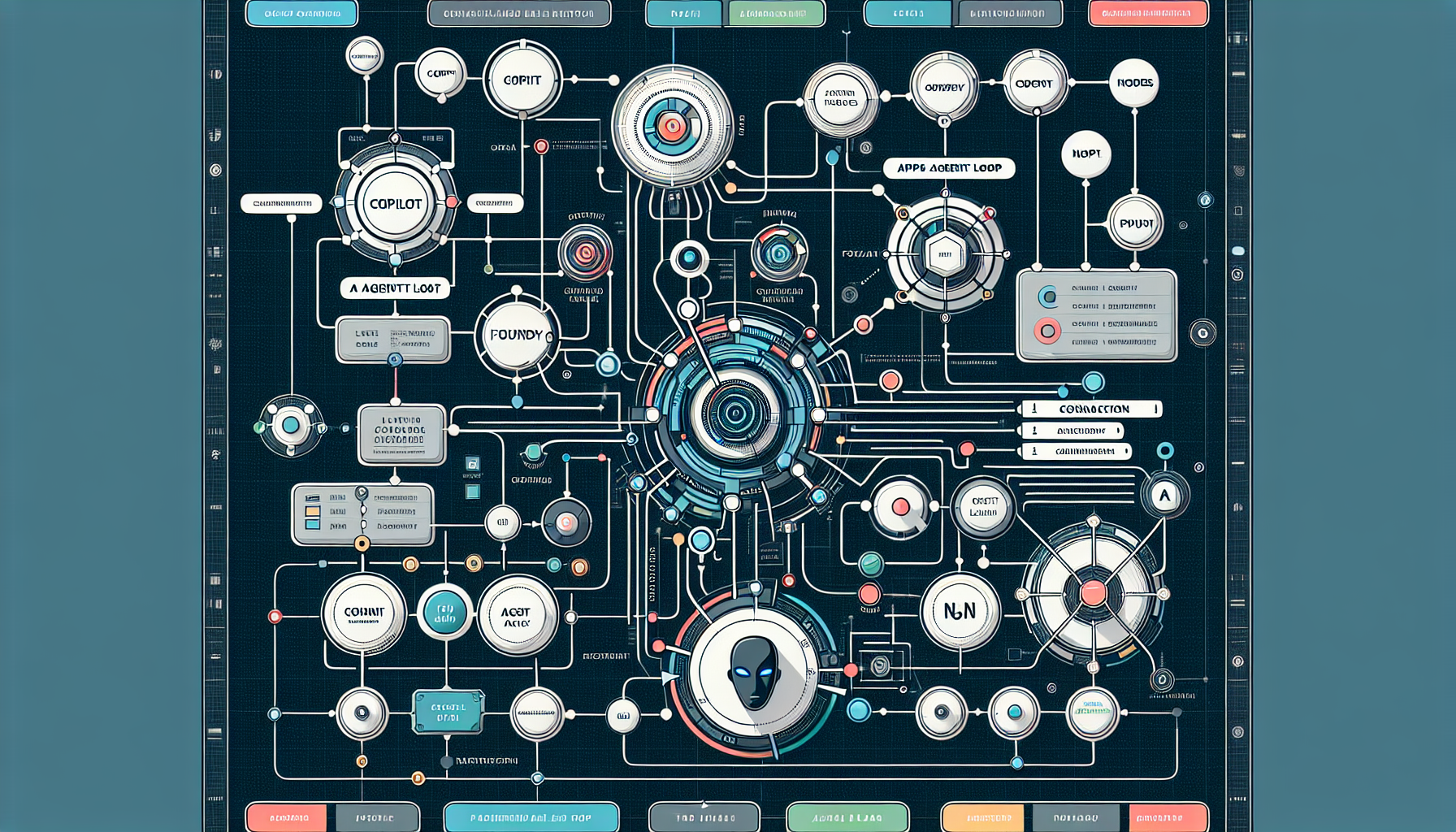
AI agents have become central to modern workflows, aiding developers and businesses by automating complex tasks. Various platforms have emerged to support this transformation, providing unique capabilities and abstractions above foundational AI services. This article dives into tools provided by Microsoft like Copilot, Logic Apps Agent Loop, and Foundry Agent Builder, as well as non-Microsoft solutions like n8n and GPT Agent Builder.
Microsoft-Built AI Agent Technologies
Microsoft 365 Copilot
Microsoft's Copilot technology integrates deeply into the Microsoft Office 365 ecosystem, leveraging Azure's large language models and Microsoft Graph for contextual insights. Architecture Design:
- Entry-point: Users interface via prompts in productivity apps like Word or Excel.
- Core AI Logic: Powered by Azure OpenAI Service, enabling dynamic prompt handling.
- Data Layer: Contextual data is fetched from Microsoft Graph with relevant access controls.
What's Unique?
Copilot bridges generic functionalities and enterprise-grade confidentiality for legal, productivity, and security use-cases. Its integration with Microsoft Teams enables real-time AI-powered suggestions during collaboration.
Agent Loop in Azure Logic Apps
Agent Loop assists in creating dynamic workflows using Azure Logic Apps. The Agent Loop allows iterative actions, decision making, and complex multi-step task orchestration.
Architectural Insights:
- Logic Integration: Uses existing Azure Logic Apps connectors (over 1400+ prebuilt integrations).
- Dynamic Logic Loop: Supports conditional iterations and parallel logic paths via low-code approaches.
- Custom AI Actions: Easily integrate models like GPT via Azure OpenAI tools to expand agent logic.
Advantages:
Agent Loop thrives in scenarios requiring decision-making under ambiguous states or automation that evolves based on runtime outputs.
Foundry Agent Builder
The Foundry Agent Builder excels in producing lightweight AI workflows for scalable solutions.
Architecture Model
Operates atop Azure services, offering SDK support for languages like Python, TypeScript, and C#. The builder provides a centralized platform for training, deploying, and managing agents.
Highlights:
- Quick Deployment: No-code interfaces for rapid workflows creation.
- Scalable: Integrates with Azure Machine Learning for model optimization and scaling.
Non-Microsoft Alternatives
GPT Agent Builder (by OpenAI)
OpenAI's GPT Agent Builder, popularly launched as AgentKit, empowers developers to deploy agents updated with cutting-edge models like GPT-4 Turbo. The platform supports visual workflow design with minimal coding required.
Key Features:
- Chain-of-thought reasoning and model combinations (e.g., GPT + external APIs).
- No-cost sandboxing; cost applies upon running inference tasks.
- Prebuilt templates simplify setting up advanced conversational agents.
n8n
n8n provides a low-code automation tool with robust integrations.
Architectural Layout:
- Built-in workflows and error handling for agents.
- Plugin support allowing integration of NLP engines like OpenAI or Hugging Face.
- Community-contributed nodes enable customization at scale.
Strengths:
- Enables both generic automation and AI workflows.
- Easy adoption for non-developers via drag-and-drop GUI for workflow creation.
- Extensive community resources and example workflows.
Core Abstractions Across Platforms
While these platforms vary in scope, their architectures align on foundational technologies like:
- AI Models: GPT is often the backbone, extended by self-hosted adaptations on cloud services.
- Workflow Engines: Tools like Logic Apps or n8n provide user-friendly design, empowering both developers and business users.
- Custom Connectors: All platforms offer integration possibilities with datasets, APIs, and cloud services.
Choosing the right tool often depends on the target user—low-code solutions like n8n are excellent for beginners, while Foundry is better suited for developers seeking more control.
Conclusion
AI agent builders offer flexibility, scalability, and robust integrations. Their comprehensive architectures support a wide array of use cases, from enterprise-level automation with tools like Copilot and Foundry, to open, customizable platforms like n8n. Thoroughly evaluate your specific project requirements—data security, coding expertise, or automation complexity—before selecting the right tool.
Explore these platforms, and start your journey of creating smarter, more agile systems today.
Comments
Join the discussionNo comments yet. Be the first to comment.